
Table of contents
ARTIFICIAL INTELLIGENCE & SOCIETY
PART 17
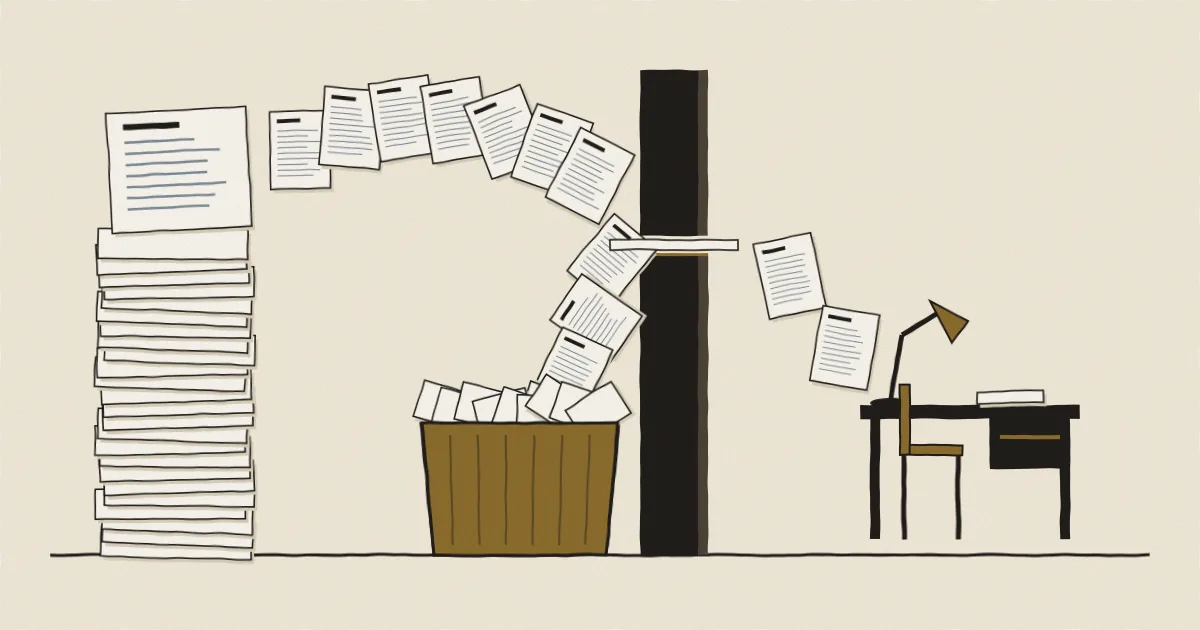
A lot of people apply for jobs online and never hear back. Sometimes a person read the application and passed on it. Sometimes no person read it at all.
Derek Mobley says that since 2017 he applied for more than 100 jobs at companies that use Workday’s hiring software, and he was turned down for every one. The rejections often came right away or in the middle of the night, so he believed they were automated. He sued Workday in 2023. Workday says the claims are false and that its customers stay in control of their own hiring.[1]
I know what it feels like when applications go nowhere. I was convicted of a felony possession charge at 19. After that I went from menial job to menial job, and interviews ended once the background check came up. I wrote about those years in an earlier piece on drug felonies.
Back then, at least a person was making the call.
I use AI every day, and I’m not against it in hiring. But I want to know what happens when the first no comes from software. And what can a job seeker do about it?
Direct Answer
About half of employers now use AI somewhere in recruiting. In a 2025 SHRM survey, 51% of organizations said they use AI for recruiting tasks like screening résumés and messaging candidates.[2]
Those tools can carry bias. In a University of Washington study, AI models ranking real résumés favored names associated with white applicants 85% of the time.[3]
Still, a few places now require employers to test these tools or tell applicants about them. New York City has required bias audits and notice since 2023.[4] Illinois made discriminatory AI use in hiring a civil rights violation on January 1, 2026.[5] Colorado’s law covers hiring decisions made on or after January 1, 2027.[6] Older laws still apply too. Discrimination is illegal whether a person or a program does it, and background check reports come with their own federal rules.[7]
If you think software screened you out, you have more rights than most people know. Most of the time, though, you have to ask for them.
Where the software sits
Most applicants picture a hiring manager reading their résumé. More and more, something reads it first, and the applicant is never told.
New York’s state comptroller described the common uses in a 2025 audit. Employers use automated tools to:[8]
- scan résumés for key words and rank candidates
- look through a candidate’s online presence
- analyze video interviews for behavior and mannerisms
Background checks are a separate step, but they can be automated too. When an employer buys a report from a background check company, federal law sets rules for how that report can be used.[7]
None of this has to be bad.
The same audit said these tools can save companies time and money. It also said they can amplify existing biases and create new ones, and that there is often little openness about what the tools can and cannot do.[8]
What the research found
The University of Washington researchers took more than 550 real résumés and job listings across nine occupations. They changed only the names, using names associated with white and Black men and women. Then three AI models ranked the résumés against the listings (over three million comparisons in all).[3]
Here is what came back: white-associated names were favored 85% of the time and Black-associated names 9% of the time. Male-associated names were favored 52% of the time and female-associated names 11% of the time. Names associated with Black men were never favored over names associated with white men.[3]
This was a test setup, not a study of one company’s product. It does not prove that any particular employer’s tool does the same thing. Still, it shows that models used for this kind of ranking can pick up bias from their training, even when nobody asks them to.[3]
I think that is the part people miss. Nobody has to program a bias in for it to show up.
The Workday case
Mobley’s lawsuit is one of the first big tests of who answers when hiring software screens someone out.
On May 16, 2025, a federal judge in California let the age discrimination part of the case go forward as a nationwide collective action. It covers applicants age 40 and older who were denied employment recommendations through Workday’s platform since September 24, 2020.[9] Then on June 22, 2026, the judge let claims under California’s discrimination law and a disability claim go forward. She threw out a race-based claim, and she threw out a claim that Workday is liable as an employer for its own hiring.[1]
The case is not over.
Workday’s response to the class certification motion is due November 10, 2026, and a hearing is set for March 9, 2027.[10] None of the rulings so far is a finding that Workday’s software discriminated. They decide whether the claims can be heard.
To me, the open question is responsibility. Workday says employers make the hiring decisions. The plaintiffs say the software made the first cut. If one vendor’s tool turns down thousands of people at hundreds of companies, who answers for that?
The courts are still working it out.
What the laws require so far
| Where | Law | What it requires | Since |
|---|---|---|---|
| New York City | Local Law 144 | A bias audit of the tool within one year before use, a public summary of the results, and notice to candidates | Enforced since July 5, 2023[4] |
| Illinois | Human Rights Act, as amended by HB 3773 | No AI use that has the effect of discriminating against protected classes, no using ZIP codes as a stand-in for them, and notice to employees when AI is used | January 1, 2026[5] |
| Colorado | SB 26-189 | Notice when an automated tool is used in a hiring decision, and a plain-language description of the tool’s role within 30 days after an adverse outcome | Decisions on or after January 1, 2027[6] |
| Everywhere in the U.S. | Fair Credit Reporting Act | Before turning someone down because of a background check report, the employer must give a copy of the report and a summary of rights | In place for background reports[7] |
In New York City, the notice has to come 10 business days before the tool is used. Fines run from $500 to $1,500 a day.[4][8]
Rules only help if someone enforces them. The New York state comptroller’s December 2025 audit found the city agency received only two complaints about these tools in two years. The agency reviewed 32 companies and found one problem; the auditors reviewed the same companies and found at least 17 possible violations.[8] City officials told the auditors that education plus complaints is the most effective way to enforce the law.[8] That means the system mostly depends on applicants who know to complain.
Why so few complaints? I think the answer is simple, even if it is hard to fix.
Most applicants have no idea a tool was used.
What this means for people with a record
For people with a record, the background check has always been the step where things end.
Software can make that step faster and quieter, but it does not change what the law says about it.
In Wisconsin, where I live, the law already says a lot about this. Under the Wisconsin Fair Employment Act, an employer can turn someone down for a conviction only when it is substantially related to the job. A theft conviction can relate to a cashier job. A drunk driving offense can relate to a truck driving job, but probably not to a cashier job.[11] The state’s Department of Workforce Development also says an employer cannot make a rule that no one with a conviction record will be hired. Each job and each record has to be looked at on its own. An employer also cannot ask about arrests that did not lead to a conviction, other than pending charges.[11]
So I would want to know how an automated screen that drops anyone who checks a conviction box squares with those rules.
Federal guidance points the same way. The EEOC says employers should not use a policy that excludes people with certain criminal records if it significantly disadvantages people of a particular race or another protected group and does not accurately predict who will be a reliable, safe employee.[7]
This is not legal advice. Still, the basic rules are public. The rule that applies depends on your state, the job, and the record. The agencies listed below are the place to ask.
What you can do
- Read the notices. If you apply for jobs in New York City or Illinois, or in Colorado starting in 2027, employers have to tell you when they use these tools.[4][5][6] Save those notices.
- Ask for the background report. If an employer is about to turn you down because of a background check, they have to give you a copy of the report and a summary of your rights first. That means you get to see the report before the decision is final, and that is your chance to fix errors or explain the record.[7]
- Keep a record. Write down the job, the date you applied, and when and how the rejection came. Note it if the rejection came a few minutes after you applied, or at 3 a.m.
- Ask whether a person reviewed it. You may not get an answer, but asking puts it on the record.
- File a complaint where it belongs. In Wisconsin, the Equal Rights Division takes employment discrimination complaints, including conviction record complaints, within 300 days.[11][12] In New York City, the Department of Consumer and Worker Protection takes complaints about these tools.[4] Federal discrimination complaints go to the EEOC.[7]
The question underneath
In Part 16 I asked three questions about any AI people depend on: can anyone see how it works, who answers when it fails, and can you leave? Hiring is where those questions get personal.
You can’t leave a screening tool you never knew was there.
Part 7 asked what happens if AI takes much of the work. This part is about the work that is still there, and who gets let in.
I wrote about my own stretch of rejections in my memoir.[13] Back then, I could at least see where things ended. It was in an interview, with a person, when the background check came up. Sales was one of the few places where my results counted for more than my record.
Now more of that first cut happens before any interview. If software is going to make it, the people it cuts should be able to find out it happened and get a person to look again.
Frequently Asked Questions
Do employers use AI to screen job applications?
Many do. In SHRM’s 2025 Talent Trends survey, 51% of organizations said they use AI for recruiting tasks such as résumé screening and candidate communication.[2]
Can AI hiring tools be biased?
Yes. In a University of Washington study, AI models ranking more than 550 real résumés favored white-associated names 85% of the time and never favored Black male-associated names over white male-associated names.[3] The study was a test setup, not an audit of a specific product.
What is the Workday AI hiring lawsuit about?
Mobley v. Workday alleges that Workday’s applicant screening tools discriminated against older applicants and others. In May 2025 a federal judge let the age claim go forward as a nationwide collective action, and in June 2026 she let California law and disability claims proceed.[9][1] No court has found that the software discriminated, and Workday denies the claims.[1]
Which laws regulate AI in hiring?
New York City’s Local Law 144 requires bias audits and notice to candidates.[4] Illinois’s Human Rights Act has banned discriminatory AI use in employment decisions since January 1, 2026.[5] Colorado’s SB 26-189 applies to decisions made on or after January 1, 2027.[6] Federal discrimination laws and the Fair Credit Reporting Act also apply.[7]
Can an employer in Wisconsin refuse to hire me because of a conviction?
Only if the conviction is substantially related to the job, according to the Wisconsin Department of Workforce Development. An employer cannot have a rule against hiring anyone with a conviction record, and each job and record has to be considered on its own.[11] Complaints go to the Equal Rights Division within 300 days.[11]
What should I do if a background check cost me a job?
Under the Fair Credit Reporting Act, the employer has to give you a copy of the report and a summary of your rights before turning you down, and you can dispute errors with the company that made the report.[7]
References
- HR Dive. “Workday can’t shake California AI discrimination claims.” June 23, 2026. https://www.hrdive.com/news/workday-california-AI-bias-lawsuit-feha/823555/
- SHRM. “Candidate ‘Ghosting’ and Employer Competition Are Fueling Talent Shortages, New SHRM Research Finds” (2025 Talent Trends). July 25, 2025. https://www.shrm.org/about/press-room/candidate—ghosting—and-employer-competition-are-fueling-talent
- University of Washington News. “AI tools show biases in ranking job applicants’ names according to perceived race and gender.” October 31, 2024. https://www.washington.edu/news/2024/10/31/ai-bias-resume-screening-race-gender/ Paper: Wilson and Caliskan, “Gender, Race, and Intersectional Bias in Resume Screening via Language Model Retrieval,” AAAI/ACM Conference on AI, Ethics, and Society, 2024. https://ojs.aaai.org/index.php/AIES/article/view/31748
- NYC Department of Consumer and Worker Protection. “Automated Employment Decision Tools (AEDT).” https://www.nyc.gov/site/dca/about/automated-employment-decision-tools.page
- Illinois General Assembly. Public Act 103-0804 (HB 3773), amending the Illinois Human Rights Act, 775 ILCS 5/2-102(L), effective January 1, 2026. https://www.ilga.gov/Legislation/PublicActs/PrinterFriendly/103-0804
- Colorado General Assembly. SB26-189, Automated Decision-Making Technology, signed May 14, 2026. https://www.leg.colorado.gov/bills/SB26-189
- U.S. Equal Employment Opportunity Commission and Federal Trade Commission. “Background Checks: What Employers Need to Know.” https://www.eeoc.gov/laws/guidance/background-checks-what-employers-need-know
- Office of the New York State Comptroller. “Enforcement of Local Law 144: Automated Employment Decision Tools” (Audit 2024-N-6). December 2, 2025. https://www.osc.ny.gov/state-agencies/audits/2025/12/02/enforcement-local-law-144-automated-employment-decision-tools
- Holland & Knight. “Federal Court Allows Collective Action Lawsuit Over Alleged AI Hiring Bias.” May 27, 2025. https://www.hklaw.com/en/insights/publications/2025/05/federal-court-allows-collective-action-lawsuit-over-alleged
- Mobley v. Workday, Inc., N.D. Cal., Order Granting Motion to Change Time (2026), class certification schedule. https://caselaw.findlaw.com/court/us-dis-crt-n-d-cal/239454.html Also TechTimes, “Workday AI Hiring Lawsuit Tests Who Is Responsible When Applicants Are Screened Out by Software,” November 3, 2026. https://www.techtimes.co.uk/workday-california-ai-hiring-bias-class-action-1809672
- Wisconsin Department of Workforce Development, Equal Rights Division. “Arrest and Conviction Record.” https://dwd.wisconsin.gov/er/civilrights/discrimination/arrest.htm
- Wisconsin Department of Workforce Development. “How to File a Civil Rights Complaint.” https://dwd.wisconsin.gov/er/civilrights/complaint.htm
- Drasen, Andrew. A Vision of Hope. Memoir. https://www.avisionofhopebook.com/books/memoir