
Table of contents
ARTIFICIAL INTELLIGENCE & SOCIETY
PART 11
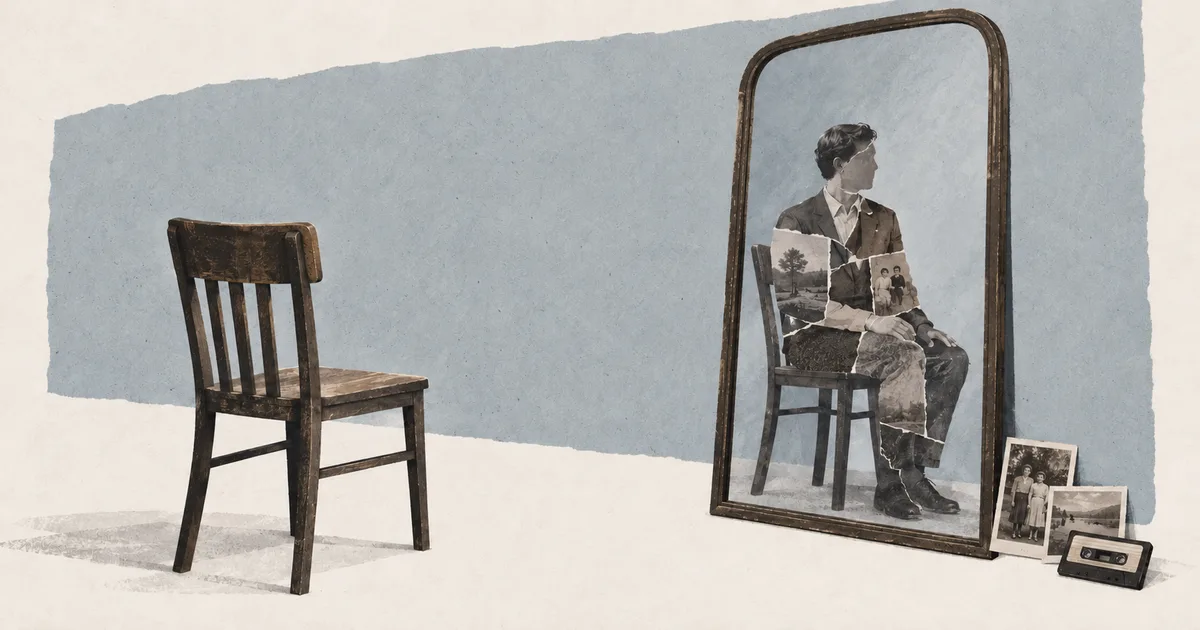
What if we could have continuity of memory and experience after death, inside a body that is biologically identical to the one that died?
Not a tribute to you. Not a chatbot trained on your text messages. You. The same memories, the same way of thinking, the same recollection of the summer you were nineteen and the thing you were afraid of that year and never told anybody. Stopped, and then picked back up.
Would that be immortality? Would it be a soul continuing on, the way a lot of people already believe something continues? Would it be an avatar of you, running the most complete recording anybody has ever made? Or would it be something we do not have a word for yet?
I do not know, and I am not going to spend this essay talking you into an answer, because I do not have one to sell. I am not arguing for this and I am not arguing against it. I think it is going to matter, and I think the argument is better had now than later, and those are different claims from saying it should happen.
What I can do is show you how I get there. When I think about AI, about what is already possible, about where the research is actually being done right now and what could plausibly come of it, this is where my mind ends up. Every link in the chain below is something people are working on today, for reasons that have nothing to do with any of this. I went looking for the place where it becomes impossible, and I could not find it.
That is not the same as saying it will happen. It is saying I have run out of reasons to be sure it will not.
This series began with what happens when a machine trusts the wrong account, and has worked its way up to what happens when machine knowledge arrives inside a living person’s thinking. This part is the far end of that line.
Let me show you how I get there.
Why I keep circling this
Everybody loses people. You get a voice on an old message, a few photographs, some things you remember them saying, and then a lot of blank space where the rest of the person used to be.
What sits with me is not the wish to bring anybody back. It is how thin the record is. A whole life happens, decades of it, and what survives is a handful of files and whatever the people who loved them can still recall. The recording we keep of a person is almost nothing compared to the person.
I have tried to leave more than a thin record myself. My memoir puts journal entries I wrote while I was incarcerated next to chapters I wrote looking back, and it is still only a small part of one life.
So the question is not whether we should want more than that. It is what happens if the recording stops being thin.
The recording is about to get very good
Start with the outside, because that part is furthest along.
In Part 9 I wrote about machines moving into physical work, and one of the details that stuck with me was surgical robotics. A surgeon sits at a console and works through instruments that give enhanced vision and filter out the tremor in human hands. The machine does not just do what the hand does. It sees better than the eye and holds steadier than the wrist.
I do not think that capability stays in an operating room, and I do not think it arrives as a machine strapped to somebody’s head. I think it arrives as a contact lens.
That is closer than it sounds. In 2025 a team led by researchers at the University of Science and Technology of China published work in Cell on soft contact lenses that let people see near-infrared light, which sits just past the edge of what human eyes register.[1] The lenses carry nanoparticles that absorb infrared and re-emit it in colors we can see, and they do it with no battery, no wires, and no procedure to put them in. Participants wearing them could make out infrared patterns and flashing signals, and could do it with their eyes closed, because infrared passes through the eyelid better than visible light does. A later version mapped three different infrared bands onto red, green, and blue, so the wearer could tell one band from another.
I want to be accurate about how small that still is. The lenses worked against infrared coming from an LED source rather than against a dark room, near-infrared is not heat so none of this is thermal vision, and the lens records nothing at all. It is a filter, not a camera.
But look at what it settles. Whether you can give a person a sense they were not born with, without surgery, without a headset, in something they put in with a fingertip, is no longer an open question, because somebody has already done it. What stays open is which senses, how many of them at once, and whether the thing ever writes any of it down.
That is where my own mind goes with it. One lens that you wear like any other, that changes what it does on command, so that infrared and magnification and heat become settings you switch between rather than devices you carry. RoboCop without the metal eye.
I do not know how we get there and I am not going to pretend otherwise. Zoom, thermal, and storage are three separate unsolved problems, and having solved the first says nothing about the other two. What I do know is that they are engineering problems now instead of biology problems, and that is a different category of hard.
Then imagine the version that does not turn off. Not a photograph of a birthday. The whole birthday. Then the whole year. Then the whole life, at a resolution better than the eye that lived it, with the ability to go back and look closer at something you barely noticed at the time.
We are not there. But nothing on that path requires a discovery about how the world works, only the curve we are already on continuing to bend the way it has been bending.
The part underneath the video
A recording of everything you saw would still be the outside of a life. It would show the room, not what the room felt like. That gap is the real question, and it is the one where the research gets interesting.
Work on reading meaning out of brain activity is real and it is public. A team at the University of Texas at Austin built a decoder that reconstructs the gist of what a person is hearing, imagining, or watching, using a non-invasive scanner and a lot of training time per individual.[2] A follow-up cut the setup for a new participant down to about an hour, by learning to translate one person’s brain activity into the predicted activity of another.[3] At Berkeley and UCSF, researchers took signals from the surface of the brain of a woman who could not speak and turned her attempts into streaming audible speech, using a recording of her own voice from before her injury to make the output sound like her.[4]
None of that is mind reading, and I want to be careful not to oversell it. These systems recover meaning rather than memory, they need a participant who is awake and cooperating, and they are laboratory instruments rather than products.
But notice what that cooperation requirement actually means if you run the chain forward. When I first started thinking about any of this, the requirement looked like the wall. Every one of these systems needs somebody alive, awake, and willing to sit there and train it, and a dead person is none of those things. That is true, and I think it is probably permanent.
What I eventually noticed is that it does not matter, because nothing in this chain requires reading a dead person. The recording would happen while you are alive and with your consent, the same way people already agree to wear a heart monitor or carry a phone that logs everywhere they go. Nobody would be decoding you afterward. You would have been recording the whole time.
Implanted interfaces push in the same direction from the other side. Devices are being placed in the brains of human volunteers now, in trials aimed at restoring movement and speech to people who have lost them. I want to be clear that I think that work is worth doing, and that giving somebody back the ability to say what they mean is about as good a reason to open a skull as I can think of. But the same hardware that lets a paralyzed person move a cursor is, described plainly, a device that reads neural activity and writes it out as data.
So you would have two recordings running at the same time. One is everything you saw and heard. The other is what was going on in your head while you saw and heard it. Line those up against each other and you no longer have footage of a life. You have the room, and what the room felt like.
If it is data, it moves
This is the step people skip past, and it is the least mysterious one.
Once something is data, the hard problems become storage, bandwidth, and format, and those are engineering problems we have spent seventy years getting very good at. The pattern has held the whole time. Anything that becomes data eventually becomes cheap to keep, easy to copy, and trivial to move.
A lifetime of high-resolution video with a neural track running underneath it is an enormous amount of data, but it is not an impossible amount, and we already store things without thinking that would have been unthinkable a generation ago.
So assume it can be held. Assume it can be copied. Assume it can be sent somewhere, or loaded into something.
Something to load it into
Here is where I am most clearly speculating, and I want to flag that rather than dress it up.
We can print objects, and we are learning to print with living material. Researchers have implanted a bioengineered ear grown from a patient’s own cells. Laboratories have built tissue with working internal channels so that thick pieces of it can be kept alive. This is early and it is partial and it is nothing like building a person.
But the direction is not ambiguous. We are getting better at manufacturing biological structure, and there is no law that says the ceiling is an ear.
At the same time we are getting better at mapping what is already there. A collaboration between Harvard and Google reconstructed a cubic millimeter of human cortex at the level of individual connections, about 57,000 cells and 150 million synapses in a piece of tissue smaller than a grain of rice.[5] That is a tiny volume and an enormous achievement, and it tells you the scale of the real problem rather than solving it.
Those are two separate lines of work and neither one is aimed at the other. One is learning to build living tissue. The other is learning to read a brain in full detail. But if we get good enough at both, somebody is going to ask the obvious question, which is whether you can grow a body and put a mapped life into it.
I do not claim to know that this is possible. What I am saying is that I cannot find the step that forbids it.
So what would you have made?
Now go back to the question at the top.
Suppose every link held. There is a body, biologically identical to the one that died, grown rather than born. There is a complete record of a life loaded into it, the outside and the inside both. It wakes up remembering your childhood, your mistakes, the people you loved and how you failed them and what you did about it. It is not approximating you from photographs and secondhand stories. It has the whole thing, and it answers the way you would answer.
So which of the four is it?
Immortality. If you say yes, obviously, then you are saying a person is the pattern. Everything that made you a particular person is preserved and running, and demanding something beyond that starts to sound like demanding a thing you cannot point to or measure.
A soul continuing. A lot of people already believe something leaves the body and persists, and I am not here to tell anybody they are wrong about that. But this case asks a hard question of that belief rather than settling it. If a soul is what makes you you, then loading the file into the new body either draws it back or it does not, and I have never heard an account of which one happens that did not come down to hoping. If it does not come back, the thing at the table has everything except the part that mattered, and it cannot tell.
An avatar. If you say it is obviously not you, then you owe an account of what is missing. Something would have had to continue from the old body to the new one, and you have to say what that something is, because it is not the memories and it is not the personality and it is not how you treat people. It is whatever carries the experience itself across, and I have never heard anybody describe that convincingly either.
Something else. This is the one I suspect is true, and it is the least satisfying, because it means the question is badly formed. We built the words person, dead, and alive in a world where a life had exactly one copy and ended once. None of those words were built for this, and forcing the answer into one of them may be the same mistake as arguing about whether a corporation is a person.
Here is the part that unsettles me most, and it holds no matter which of the four you picked. The thing that wakes up would not be able to settle it either. It would remember expecting to wake up. It would report having survived. It would say it was me, and it would not be lying. A faithful copy and a genuine continuation would give exactly the same answer, which means the one thing we cannot do is ask.
Why think about it before it arrives
I am not even sure any of this is the intention of the people building the individual pieces, and I suspect it is not. The surgeons want steadier hands. The neuroscientists want to give speech back to people who lost it. The tissue engineers want to fix an ear. Nobody in that chain is working on immortality.
That is exactly why it is worth saying out loud. Things do not usually arrive announced. They arrive as an integration of tools built for other reasons, and by the time the combination is obvious, the decisions that shaped it were made years earlier by people solving unrelated problems.
So the practical question is not whether to believe me. It is what you would want to be true before any of this is close.
Who owns a recording of your life. Whether consent to be recorded is consent to be rebuilt. Whether the thing that wakes up has any say in whether it keeps running. What you owe it if it does. Whether a family gets to make that decision for someone who is gone, and which family member decides. Whether a person can refuse in advance, and whether that refusal holds.
Those are answerable now, cheaply, in advance. They become much harder to answer once there is a product and a price and somebody’s grieving parent in the room.
So I end where I started. If we could have continuity of memory and experience after death, inside a body biologically identical to the one that died, I cannot tell you what that is. I know what it would remember. I know what it would say if you asked it. I do not know whether it is immortality, a soul carried across, an avatar running a very good recording, or something none of those words were built to describe.
I do not claim to have that answer, and I am not trying to talk anybody into mine. What I want is for the question to get asked while it is still cheap to ask, because my instinct is that we will build it first and argue about it afterward, the way we usually do.
I would rather we did the arguing while it is still hypothetical.
Frequently Asked Questions
Is any of this possible today?
No. The pieces described here are real and public, but they are early, narrow, and built for other purposes. Nothing described in the second half of this essay exists, and this piece is explicit about where verified research stops and speculation begins.
Doesn’t the fact that brain decoding needs cooperation rule this out?
It rules out reading a dead person’s mind, which is probably permanent. It does not rule out this chain, because the recording described here would be made during life and with consent. That is the whole difference.
Is this the same thing as mind uploading?
Not quite, and the difference is the whole point. Mind uploading usually means copying a mind into a computer, so most of the argument about it turns into an argument about whether software can be conscious. This piece skips that, because the body at the end of this chain is grown rather than simulated. It is made of the same material you are. That does not settle whether it is you, but it does take away one of the places people usually go looking for the answer.
Would that be immortality, a soul, or an avatar?
That is the question the essay asks and deliberately does not answer. It lays out four readings, including the possibility that none of those words fit, and argues that a record accurate enough to be indistinguishable would also be accurate enough to sincerely believe it had survived. Its own testimony cannot settle it, which is why the question has to be worked out beforehand rather than after.
References
[1] Yuqian Ma, Yunuo Chen, Sheng Wang, et al., “Near-infrared spatiotemporal color vision in humans enabled by upconversion contact lenses,” Cell, May 2025. https://doi.org/10.1016/j.cell.2025.04.019
[2] Jerry Tang, Amanda LeBel, Shailee Jain, and Alexander G. Huth, “Semantic reconstruction of continuous language from non-invasive brain recordings,” Nature Neuroscience, vol. 26, 2023, pp. 858–866. https://doi.org/10.1038/s41593-023-01304-9
[3] University of Texas at Austin, “Improved Brain Decoder Holds Promise for Communication in People With Aphasia,” UT News, February 6, 2025. https://news.utexas.edu/2025/02/06/improved-brain-decoder-holds-promise-for-communication-in-people-with-aphasia/
[4] Marni Ellery, “Brain-to-voice neuroprosthesis restores naturalistic speech,” Berkeley Engineering, March 31, 2025. https://engineering.berkeley.edu/news/2025/03/brain-to-voice-neuroprosthesis-restores-naturalistic-speech/
[5] Anne J. Manning, “Epic science inside a cubic millimeter of brain,” Harvard Gazette, May 9, 2024. https://news.harvard.edu/gazette/story/2024/05/the-brain-as-weve-never-seen-it/