A Vision of Hope Media. Everyone has something to recover from. Books, curriculum, recovery, reentry, media.
A Vision of Hope Media. Everyone Has Something to Recover From

ReturnPath · Life Direction

Life Transformation Curriculum for People Ready to Move Forward

If you feel completely stuck, unaligned, or lacking a clear life path — ReturnPath is the personal growth workbook and self-discovery framework that turns confusion into conviction. This is high-impact life transformation curriculum built for real momentum, not motivational platitudes.

← Return to Curriculum Hub

Empowerment Pillars

Personal development mechanics that produce lasting change — not temporary motivation.

Breaking Limiting Legacy Beliefs

Phase 1 Memoir work surfaces the inherited narratives, family scripts, and past identities that keep participants stuck — creating space to choose a different story.

Mapping Intentional Future Habits

The Workbook 90-day arc translates vision into daily practice — building self-regulation routines that compound into the life participants are designing, not the one they inherited.

Vision Milestones & Goal Architecture

Reflections modules guide values alignment and decision-making frameworks — helping participants set vision milestones that reflect who they are becoming, not who others expect them to be.

Independent Self-Regulation Skills

Capstone legacy framing equips participants with independent accountability structures — the self-discovery course materials that sustain momentum long after the 16-week arc completes.

Therapeutic fusion

ReturnPath is an integrative, evidence-informed curriculum — a fusion of narrative, cognitive, motivational, and peer-recovery approaches built on nightly reading and daily workbook writing between facilitated sessions. Facilitated contact processes what the independent work surfaced; format and cadence are entirely program-defined. It is reflective and educational, not clinical therapy; formal program evaluation continues alongside pilot outcomes tracking.

  • Narrative therapy & narrative identity Phase 1 (Memoir, Weeks 1–7) uses memoir chapters and workbook prompts so participants explore upbringing, patterns, and accountability — then integrate personal history into who they are becoming. Optional sharing in session emphasizes story and meaning rather than clinical intervention, with no required disclosure of diagnosis, substance use, or criminal history.
  • Motivational interviewing (principles) Participants self-define what they want to change and what recovery or stability means for them. Facilitators hold structure with non-directive prompts — “What did that teach you?” / “What would support look like?” — rather than advice, persuasion, or prescribed outcomes. Week 1 orientation establishes this stance explicitly.
  • Cognitive reframing & belief examination Phase 2 (Reflections, Weeks 8–11) moves from narrative to belief-level work: acceptance, forgiveness, responsibility, hope, and inner dialogue. Daily meditations and workbook entries map belief systems, barriers, and supports — building cognitive awareness aligned to identity goals before action planning.
  • Expressive writing & structured journaling Daily reading and nightly workbook writing happen between facilitated sessions — the core of the arc regardless of delivery format. In session, each participant may choose one workbook answer to share; nothing must be read aloud. Guided questions, daily win logs, and section summaries turn insight into honest self-inquiry on the page.
  • Behavioral activation & action planning Phase 3 (Capstone, Weeks 12–16) consolidates insight into a 90-day arc: measurable goals, daily accountability routines, accountability-partner check-ins, and capstone presentation. The capstone is framed as a life map — values → boundaries → habits → supports → next actions — not a performance.
  • Trauma-informed facilitation Voluntary disclosure, pacing, and session norms that prohibit cross-talk or unsolicited advice — regardless of delivery format. Facilitators track weekly emotion words, hold safety and containment, and avoid clinical interpretation. Discomfort is normalized; readiness is about capacity for reflection, not perfection.
  • Peer recovery & accountability Accountability partners, daily independent reading and writing, and facilitator guides that support CPRS and peer-led delivery in whatever format fits the program. Sessions process what the work surfaced — not a prescribed meeting type. Optional 12-step-aligned meeting format is one delivery option among many; it does not replace sponsorship or clinical care.
  • Purpose-driven & meaning-centered growth Phase 2 examines ethics, belonging, contribution, and direction; Phase 3 asks participants to articulate a forward path grounded in clarified values. The arc prioritizes identity stabilization — who I am becoming — over compliance-only behavior change.

ReturnPath applies principles from these approaches through facilitator guides and session structure. It does not deliver licensed CBT, DBT, MAT, or MRT protocols. Programs may run ReturnPath alongside those models when identity-level depth is needed beneath skills-based or clinical treatment. Escalation, referral, and safety protocols remain governed by the organization’s existing clinical, compliance, and risk-management procedures.

See the phase × fusion matrix on the curriculum hub →

16-week arc

Three-phase session overview

ReturnPath follows the same Memoir → Reflections → Workbook arc on every population track. Below is the phase structure program directors use to evaluate syllabus fit.

  1. Phase 1 · Memoir: Identity & Accountability (Weeks 1–7)

    Identity, origins, and accountability — participants explore where they have been and begin defining who they are becoming through shared narrative work.

  2. Phase 2 · Reflections: Values & Direction (Weeks 8–11)

    Values, belief systems, and cognitive awareness — guided reflection on the beliefs that shape behavior and the choices that sustain change.

  3. Phase 3 · Workbook: Life Map & Action Plan (Weeks 12–16)

    90-day action planning, daily self-regulation routines, and capstone presentation — participants synthesize their journey and articulate a forward path.

Life Direction Workbook Materials

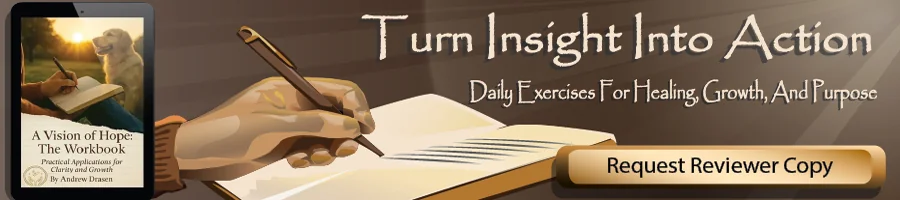
Full trilogy arc for coaches and personal growth programs, plus workbook banner context.

Thunder

Thunder — ReturnPath memoir phase: Surface limiting legacy beliefs and inherited narratives.

Surface limiting legacy beliefs and inherited narratives.

Glitch

Glitch — ReturnPath reflections phase: Clarify values and intentional identity goals.

Clarify values and intentional identity goals.

Hope

Hope — ReturnPath workbook phase: Structured 90-day practice for coaches and life-direction programs.

Structured 90-day practice for coaches and life-direction programs.

Life transformation curriculum workbook — ReturnPath capstone for personal growth programs

Coaches & Group Facilitators

Book a conversation about coach licensing, client materials, and flexible program deployment.

Coach & Individual Delivery Specs

Options for personal growth consumers and professional life coaches seeking a turnkey curriculum asset.

Independent Self-Study Individual workbook use for solo daily practice. The 90-day Workbook arc stands alone; optional facilitated contact adds accountability.
Coaching & Facilitated Delivery Facilitator guides map to whatever cadence the coach or program uses. Session materials process what participants wrote between meetings.
Career & Personal Pivot Support Structured framework for clients navigating job loss, career transition, burnout recovery, or major life realignment — without requiring a clinical diagnosis.
Flexible Delivery Format and cadence are program-defined — see delivery formats on the curriculum hub.
Coach Licensing Professional coaches receive facilitator guides and client material recommendations with program licensing. Bulk workbook ordering available.

Who This Track Serves

  • Individuals seeking direction through structured self-study
  • Professional life coaches building client momentum
  • Small group coaching programs (4–8 clients)
  • People navigating career pivots, burnout, or major life realignment

What Participants Gain

  • Limiting legacy beliefs surfaced and replaced with intentional identity goals
  • 90-day daily practice that compounds into sustained self-regulation
  • Vision milestones aligned with values — not external expectations
  • Capstone legacy framing that sustains momentum after the 16-week arc
  • Adaptable format and cadence — self-study, coaching, or facilitated programs with facilitator guides
  • Standalone coaching curriculum or complement to existing client frameworks

Next Steps

  1. 1

    Explore the workbook arc

    Review Phase 3 action planning or preview the A Vision of Hope Workbook. Learn more →

  2. 2

    Review delivery formats

    Compare format and cadence options on the curriculum hub. Learn more →

  3. 3

    Request coach licensing

    Send a message for facilitator guides and client material recommendations. Book a conversation →

  4. 4

    Run your first client group or coaching arc

    Weekly Reflections discussions plus individual Workbook practice over 16 weeks.

Frequently Asked Questions

What pacing works best for life direction delivery?

ReturnPath centers daily Workbook practice between facilitated sessions. Self-study, coaching, and facilitated programs all use the same arc — cadence is program-defined. See avisionofhopebook.com/curriculum#delivery-formats for options.

Does ReturnPath include behavioral activation for coaching groups?

Yes. Phase 3 Workbook consolidates insight into a 90-day arc — measurable goals, daily accountability routines, and capstone planning framed as a values-based life map. See avisionofhopebook.com/curriculum#fusion-behavioral-activation for how action planning is incorporated.

Is ReturnPath suitable for different delivery formats?

Yes. The identity-based framework works in self-study, coaching, and facilitated programs. Facilitator guides include pacing adjustments for solo and facilitated delivery.

How does this curriculum spark real momentum for career or personal pivots?

ReturnPath requires participants to self-identify what they want to change and articulate the life they are building — then provides 90 days of structured daily practice to bridge the gap. Conviction replaces willpower because change supports identity, not external pressure.

Can life coaches use ReturnPath as a client resource without certification?

Yes. Program licensing includes facilitator guides designed for professional coaches. No specialized clinical certification required — the curriculum provides the structure; the coach provides the relationship.

How does ReturnPath adapt to coaching programs?

ReturnPath adapts to coaching and facilitated programs with solo Workbook practice between sessions. See avisionofhopebook.com/curriculum#delivery-formats for format options and standalone vs complementary use.

What is the phase overview for coaching delivery?

Phase 1 Memoir work (weeks 1–7) surfaces limiting legacy beliefs; Phase 2 Reflections (weeks 8–11) maps values and vision milestones; Phase 3 Workbook (weeks 12–16) delivers the 90-day action arc. Format and cadence are program-defined. See avisionofhopebook.com/curriculum#week-by-week-syllabus for week titles.

Start Your Transformation

Schedule a call or send a message for individual workbooks and coach licensing — or explore the A Vision of Hope Workbook to begin today.

Or call (262) 383-1761 · info@avisionofhopebook.com