What curriculum do certified peer recovery specialists use?
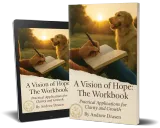
Many CPRS programs use ReturnPath because it grew from lived experience and structures recovery through the A Vision of Hope trilogy — memoir mirror, Reflections values work, and a workbook capstone. Participants do daily independent work; facilitated sessions process what that work surfaced. See avisionofhopebook.com/curriculum#delivery-formats for format and cadence options. Book a conversation to scope a pilot for your network or organization.
Can ReturnPath integrate with our existing treatment methodology?
Yes. ReturnPath incorporates motivational interviewing principles, cognitive reframing, trauma-informed facilitation, and peer recovery accountability in facilitator scripts — the therapeutic fusion approaches ReturnPath applies through structured reading, nightly workbook writing, and facilitated processing sessions.
Can ReturnPath run inside 12-step meetings?
Yes — as one optional delivery format. ReturnPath supports a peer-led 12-step meeting integration format with standard opening and closing traditions unchanged and nightly reading and daily writing between meetings. See avisionofhopebook.com/curriculum#fusion-peer-recovery for detail. It does not replace regular meetings, sponsorship, or clinical care.
What therapeutic approaches are in a peer support recovery curriculum?
ReturnPath fuses narrative identity, MI principles, expressive writing, cognitive reframing, trauma-informed facilitation, peer accountability, optional 12-step-aligned meeting format, and workbook capstone planning — built for CPRS programs and peer-led recovery. See avisionofhopebook.com/curriculum#phase-fusion-matrix for the full phase map.
Why is ReturnPath a good fit for peer support?
ReturnPath grew out of Andrew Drasen’s lived experience — addiction, incarceration, and recovery — and the memoir written on that journey. Peer support is often grounded in shared journey; ReturnPath gives that work structure: the memoir as a mirror, Reflections to clarify values, and a workbook capstone that makes change actionable through daily practice. Facilitator guides hold consistency in whatever format fits the program.
How does the trilogy work in peer support delivery?
Phase 1 uses the Memoir as a narrative mirror — participants reflect without being forced to disclose identical details. Phase 2 uses Reflections for values clarification. Phase 3 uses the Workbook for daily accountability and capstone preparation. The same arc runs regardless of delivery format; sessions process what the independent work surfaced.
Is ReturnPath appropriate for sober living programs?
ReturnPath adapts to sober living house meetings, case-management check-ins, and structured house accountability. Workbook daily routines align with house norms; facilitator guides support non-clinical peer facilitators with clear session structure.
How does the addiction recovery workbook support long-term sobriety?
The 90-day Workbook arc builds daily self-regulation habits, identity goal commitments, and capstone legacy framing — reinforcing sobriety through conviction about who the participant is becoming, not external oversight alone.
Does the curriculum require participants to disclose substance use history?
No. Participants self-identify what they want to change. ReturnPath never references drugs or alcohol directly — it works at the identity root rather than the symptom, making it appropriate for mixed-diagnosis populations.
What delivery formats work for IOP and sober living programs?
ReturnPath adapts across IOP, PHP, residential, outpatient, aftercare, and peer-led settings. Format and cadence are program-defined — see avisionofhopebook.com/curriculum#delivery-formats for options and synchronization detail.
Can certified peer recovery specialists use ReturnPath in one-on-one mentoring?
Yes — one-on-one is a supported ReturnPath format for CPRS mentoring and case management. Participants do nightly reading and daily Workbook writing between individual sessions; facilitator guides structure processing without requiring clinical licensure. See avisionofhopebook.com/curriculum#delivery-formats for format options and the Recovery & Peer Support track for CPRS deployment detail.
What does the 16-week arc cover for peer support and clinical programs?
Weeks 1–7 use the Memoir as a narrative mirror; weeks 8–11 use Reflections for values and trigger work; weeks 12–16 use the Workbook for daily accountability and capstone planning. Most work happens independently between facilitated sessions. See avisionofhopebook.com/curriculum#week-by-week-syllabus for full session titles.
How does a facilitated workbook group structure work in IOP or sober living?
Participants complete nightly reading and daily Workbook prompts on their own. Facilitated sessions — IOP blocks, house meetings, or peer groups — process what that independent work surfaced. Facilitators hold trauma-informed structure (voluntary disclosure, no cross-talk, no unsolicited advice) rather than delivering a clinical lecture. Most of the recovery progression happens between sessions.
Does ReturnPath replace manualized IOP treatment models?
No. Manualized clinical IOP protocols (for example Matrix-style manuals and other SAMHSA-shaped treatment curricula) own clinical treatment content. ReturnPath complements those protocols with identity-centered recovery framing and a facilitated workbook group structure. Clinical supervision stays with your care team.