
Table of contents
WISCONSIN JUSTICE & REENTRY
PART 7
People usually talk about recidivism as one number. Someone hears that a third of people go back to prison and assumes that is the whole story. Sometimes one number is enough for a quick conversation. Sometimes it hides the part that would tell us where to put the help.
The part it hides is timing. In Wisconsin, a large share of new offenses happen early, in the first year after release. That first year is what I call the first-year cliff in this series. It is my term, not an official DOC term, and any time I use it I need to say which outcome I am measuring.[1]
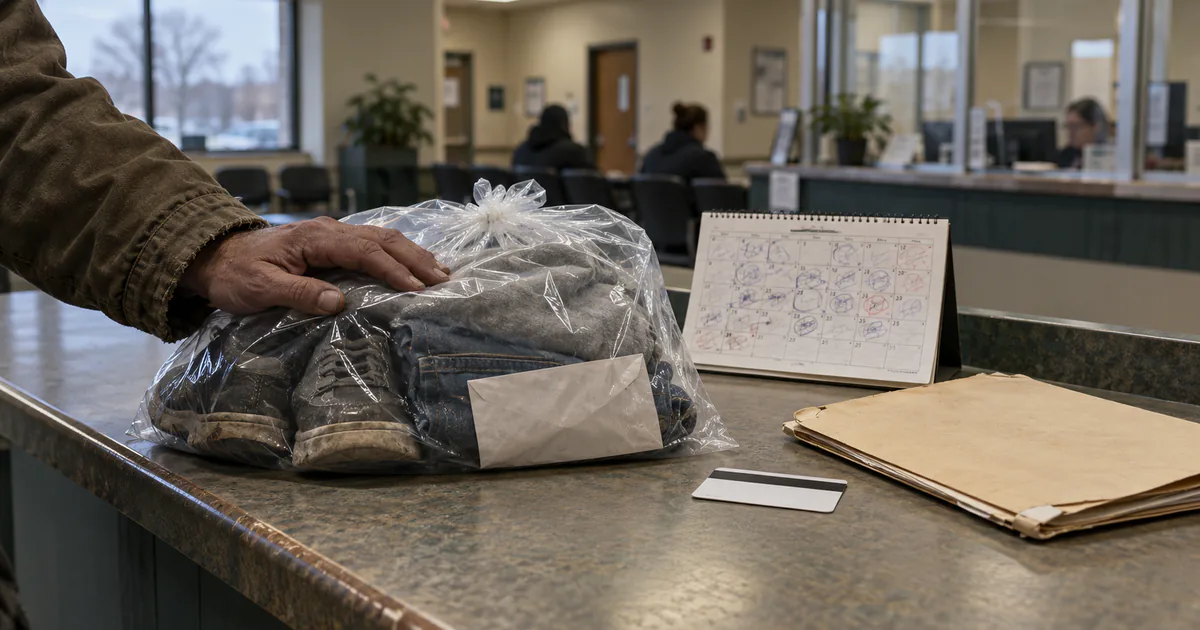
Part 6 ended at the gate: a program seat that never opened inside, a work-release job that never came, and a heavy community calendar waiting on the outside.[5] This part is what the numbers show after that gate opens.
Direct Answer
Wisconsin DOC measures recidivism three ways. Rearrest means a new arrest in Wisconsin for a new criminal offense. Reconviction means a new offense that leads to a new conviction and a sentence to DOC custody or supervision. Reincarceration means admission to a DOC prison for a revocation, a revocation with a new sentence, or a new sentence.[2]
For people released in fiscal year 2023, DOC reported one-year rates of 29.8% for rearrest, 17.4% for reconviction, and 14.3% for reincarceration. For people released in fiscal year 2021, the three-year rates were 52.8%, 36.7%, and 33.1%.[2]
The timing is the other half. In DOC’s longer-term report on people released between 2000 and 2011, among those who recidivated within three years, 25% committed the new offense within 4.5 months of release and 50% within 11.5 months.[3] That report dates recidivism by the day of the new offense, not the day someone went back to prison, and the new sentence could be supervision instead of prison.[3] That is the first-year cliff in DOC’s own numbers.
Three numbers, three different events
Rearrest, reconviction, and reincarceration are not three ways of saying the same thing.
An arrest is an accusation. It does not mean the person was convicted. That is why the rearrest number is always the highest of the three.[2]
Reconviction is narrower. It counts a new offense that ends in a conviction and a sentence to DOC custody or supervision. DOC notes that reconviction data runs a year behind, because there is a delay between a new offense and a formal conviction.[2]
Reincarceration is the one people most often get wrong. It counts a return to a DOC prison, and DOC’s definition includes a revocation with no new sentence.[2] A person can go back to prison on a revocation for breaking supervision rules or for a new charge that never turns into a conviction. That return still counts here.
I know that path from the inside. When I was on extended supervision, I picked up a new charge and my agent pushed for revocation. I waived the revocation hearing so I could argue reconfinement in front of an administrative law judge. The time was set at 23 months, and at the reconfinement hearing it dropped to 21 months and 8 days.[6][9] That kind of return shows up in the reincarceration column.
So when someone says “about a third go back,” the next question is back to what, and how soon.
The first-year numbers
Here is DOC’s most recent table side by side.[2]
| Release year | Follow-up | Rearrest | Reconviction | Reincarceration |
|---|---|---|---|---|
| FY2023 | 1 year | 29.8% | 17.4% | 14.3% |
| FY2022 | 2 years | 43.7% | 28.3% | 27.3% |
| FY2021 | 3 years | 52.8% | 36.7% | 33.1% |
These rows are three different release groups, so they are not one group tracked over time. They still give a fair picture of the shape. A rearrest rate of almost 30% in year one and about 53% by year three means a large part of the three-year total is already there in the first twelve months.[2]
DOC’s earlier report looked at timing directly. For people released from 2000 to 2011 who recidivated within three years, half had done so within the first year. A quarter had done so within four and a half months.[3] That report used DOC’s older recidivism definition, a new offense that results in a conviction and a sentence to DOC, so it lines up with the reconviction measure and not with rearrest.[3]
Death is not in any of these columns. A Washington State study of people released from prison found the risk of death in the first two weeks after release was 12.7 times that of other state residents, and the risk of death from a drug overdose was about 129 times higher.[4] That study is not Wisconsin data. I include it because it measures the same window, and because I have written about overdose risk after release separately.[7]
What the first year is made of
When I was at Fox Lake Correctional Institution, I had about a year left. Staff had named a vocational need, an alcohol or drug treatment need, and a criminal thinking need on my file. I was told I did not have enough time, and that many of those programs had wait lists of two years or more.[5]
That is how a lot of people walk into the first year. The need was written down. It was not met. If the same program is required after release, it lands in the community, on top of agent appointments and everything else.[5]
DOC’s own employment numbers show part of what else is waiting. DOC counts someone as employed if they work full time or part time, are self-employed, or work through a temp agency. For people released in fiscal year 2018, 76.4% were employed within the one-year follow-up. For people released in fiscal year 2024, that rate had dropped to 62.9%.[2] DOC also notes that some people who did not find work were reincarcerated first, which kept them from getting a job.[2]
One former participant from a group I used to facilitate spent the last 18 months of a three-year sentence at a work-release prison and still could not leave to earn money.[5] He walked out without the savings that work release is supposed to build. The first year starts from wherever the last year inside left off.
DOC’s older report also found that people with prison stays of one year or less had the highest three-year recidivism rates, and longer stays had progressively lower rates. DOC is careful about this. More than half of the people released from stays of a year or less had been admitted on a revocation only, and DOC lists other factors, such as age and offense type, that differ between the groups.[3] I am not using that finding to say short stays cause returns. I am pointing out that the people with the least time inside are also the people with the least time to get into a program before release.[3][5]
What this is not
This is not a claim that every return is the system’s fault. People make choices after release, and I made some of mine.
It is also not a full explanation of why returns happen. DOC’s tables tell us how many and how soon. They do not tell us, case by case, whether housing fell through, a job never came, treatment ended at the gate, or something else happened.[2][3]
What the timing does tell us is where the pressure is. If half of the new offenses in the three-year window happen in the first year, then reentry support that only starts after that first year is arriving late for those people.[3] Help that starts at month thirteen does not reach someone whose new offense happened at month five.
What would change the first year
Most of what would help is already named in Wisconsin policy. It just has to show up earlier.
- Finish the program need before the gate. If DOC writes a need on the file, the seat has to open while the person is still inside, so the community calendar is lighter after release.[5]
- Make work release pay. A person who leaves with savings, an ID, and a phone is in a different first month than a person who leaves with a bus pass.[5]
- Treat the first weeks as the highest-risk period. The overdose data and the timing data point at the same window.[3][4][7]
- Report the timing every year. DOC already tracks one-, two-, and three-year windows. Publishing time-to-return data as often as the rates would let the public see whether the first year is getting better or worse.[2][3]
I wrote more about how that pressure moves through the system in The Bottleneck of Bureaucracy.[8]
The first year
The first year is where the numbers bunch up. They bunch up for rearrest, for reconviction, and for reincarceration, and in other states’ research, for death.[2][3][4]
If we want fewer people going back, we have to stop treating release day as the end of the sentence’s work. For a lot of people, the hardest twelve months start that day.
Programs and reentry teams can review the Reentry & Justice track, or send a short message about facilitator-led curriculum beside what they already run. The rest of the argument is in the Wisconsin Justice & Reentry series, and my own story through this system is in A Vision of Hope.
Frequently Asked Questions
What is the first-year cliff?
It is a term I use in this series for the first year after release from prison, when a large share of new offenses, arrests, and returns to prison happen. It is not an official Wisconsin DOC term.[1]
What is Wisconsin’s one-year recidivism rate?
For people released in fiscal year 2023, DOC reported a one-year rearrest rate of 29.8%, a reconviction rate of 17.4%, and a reincarceration rate of 14.3%.[2]
How soon after release do most new offenses happen in Wisconsin?
In DOC’s report on people released from 2000 to 2011, among those who recidivated within three years, 25% committed the new offense within 4.5 months and 50% within 11.5 months. DOC dated these by the offense, not by a return to prison.[3]
Does reincarceration in Wisconsin mean a new crime?
Not always. DOC counts admission to prison for a revocation, a revocation with a new sentence, or a new sentence. A revocation without a new sentence still counts as reincarceration.[2]
Is the overdose risk after release only a Wisconsin problem?
No. The best-known study is from Washington State, where the risk of overdose death in the first two weeks after prison release was about 129 times that of other residents.[4] It shows how dangerous the same early window can be.
Where can I find Wisconsin’s official recidivism numbers?
DOC publishes them in the Becky Young Recidivism Reduction annual report and on its data and research pages.[2][3]
References
- Drasen A. Wisconsin Justice System Definitions. A Vision of Hope. September 25, 2026. https://www.avisionofhopebook.com/insights/justice-public-policy/wisconsin-justice-system-definitions
- Wisconsin Department of Corrections. Becky Young Recidivism Reduction Annual Report, Fiscal Year 2025 (Recidivism After Release; Employment; definitions pp. 22-23). https://doc.wi.gov/Documents/AboutDOC/Reentry/BY%20Report%20FY25%20FINAL.pdf
- Wisconsin Department of Corrections, Research and Policy Unit. Recidivism after Release from Prison. August 2016. https://doc.wi.gov/DataResearch/InteractiveDashboards/RecidivismAfterReleaseFromPrison_2.pdf
- Binswanger IA, Stern MF, Deyo RA, et al. Release from prison: a high risk of death for former inmates. N Engl J Med. 2007;356(2):157-165. https://pubmed.ncbi.nlm.nih.gov/17215533/
- Drasen A. Wisconsin Program Waitlists and Short Sentences. A Vision of Hope. October 16, 2026. https://www.avisionofhopebook.com/insights/justice-public-policy/wisconsin-program-waitlists-short-sentences
- Drasen A. Truth in Sentencing and Losing Street Time in Wisconsin. A Vision of Hope. October 2, 2026. https://www.avisionofhopebook.com/insights/justice-public-policy/wisconsin-truth-in-sentencing-street-time
- Drasen A. Drug Legalization Series Part 12: The Reentry Window We Keep Wasting. A Vision of Hope. https://www.avisionofhopebook.com/insights/justice-public-policy/prison-release-overdose-risk
- Drasen A. The Bottleneck of Bureaucracy: How Wisconsin Moves the Prison Pressure Around. A Vision of Hope. https://www.avisionofhopebook.com/insights/justice-public-policy/wisconsin-reentry-bureaucracy-bottleneck
- Wis. Admin. Code § HA 2.06: Good time forfeiture, reconfinement, and reincarceration hearings after waiver of final revocation hearing. https://docs.legis.wisconsin.gov/code/admin_code/ha/2/06