
Table of contents
WISCONSIN JUSTICE & REENTRY
PART 3
A REENTRY STORY · PART 1
A Reentry Story: Part 1 - Coming Home After Ten Years
I showed up at Racine Correctional Institution at 7:00 in the morning. About fifteen years ago, I was behind those same razor-wire fences. This time I was there to pick up my longtime friend PG.
And yes, this is the same PG I wrote about in A Vision of Hope.
Back at RCI
He was finishing a ten-year sentence after going through Wisconsin’s Earned Release Program.[1] It is a substance-use program that can allow eligible participants to earn earlier release to extended supervision after completing it. The week before, I went out and bought him some release clothes: white shorts, boxers, socks, and a few white T-shirts. His brother had a new pair of Jordans mailed to my house so I could bring those too.
I got there at 7:00 thinking I was prepared. The guard tower told me I couldn’t bring the clothes in until 8:45. I paced around in front of a prison that once housed me and waited for my friend to walk out of it.
I don’t know that I had some profound thought while it was happening. Mostly, I worked on Better Moose from my phone and drank too much coffee. I also made three trips to the bushes behind the storage lots across the street because there was nowhere else to go.
After about two and a half hours, PG finally came out. You could see the muscle he had put on in his shoulders, chest, and arms. His hair was braided in two long rows behind his head, and his beard was lined up.
My brother was home.
Make the question smaller
He wanted to grab something to eat. I asked what he felt like, and he didn’t know. I narrowed it down to breakfast or lunch. He picked breakfast. Denny’s it is.
He got the Philly cheesesteak omelette, I got the ultimate omelette, and we both got orange juice. He got a sweet iced coffee drink too. Nothing profound happened at Denny’s. It was just our first meal together with him back home, but the part that stuck with me was how he couldn’t answer the first question and could answer the smaller one. Prison controls a lot of ordinary decisions most of us don’t even think about, and then one morning the door opens and people start asking what you want to do.
I have never done a ten-year bit, and I won’t pretend I know exactly what that transition feels like. I do know enough about coming home to understand the value of making the question smaller. I think sometimes that is all a person needs to get moving.
Breakfast or lunch. Start there, then make the next decision.
Where do you even start when ten years of normal life kept moving without you?
The bigger thing I kept thinking about was how easy it would be to look at everything that needs rebuilding and feel like all of it needs to happen immediately. The reality is that it can’t. Trying to force it probably makes the whole thing feel even bigger.
One less problem
At breakfast, PG mentioned that he needed a phone. His sister was willing to put him on her plan, but he would still need the physical phone. Buying one could eat up a big chunk of what he had, because he walked out after ten years with about $700 in his release account.
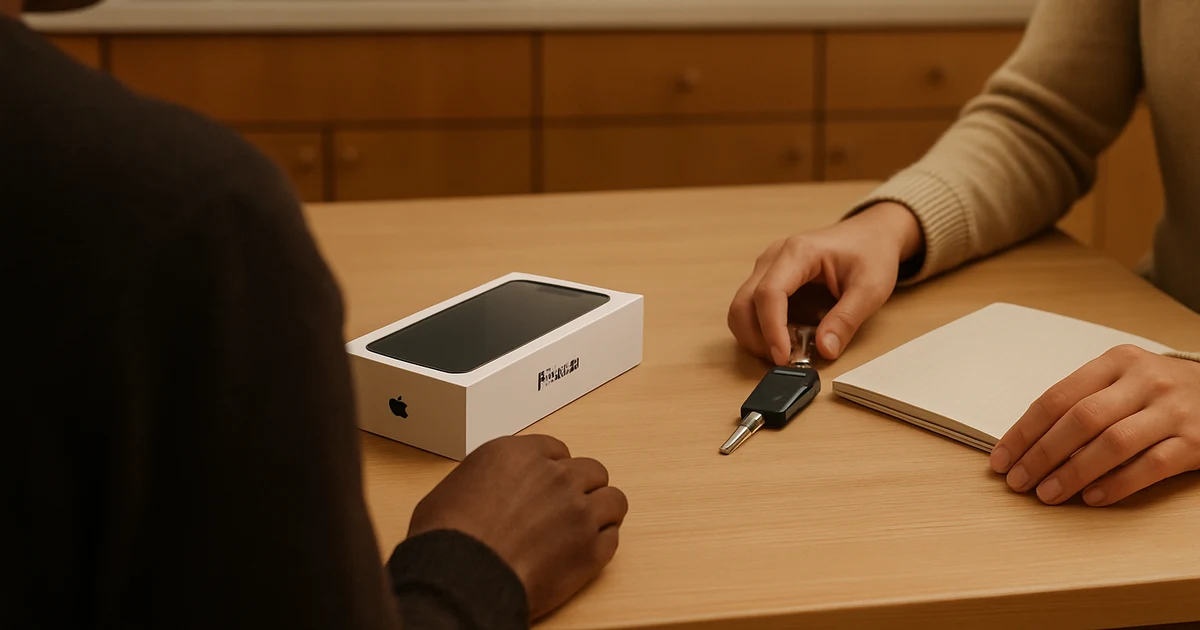
I happened to have an extra iPhone 14 Pro Max. Long story. It was sitting there unused, and I told him I had a phone for him. I wasn’t thinking about it as some grand gesture. I had something he needed. Giving it to him meant one less thing he had to worry about during his first few days home.
It made me think about Davis. The last time I got out of MSDF, he hit me with $100 and basically said, “Welcome home, bro.” There were no expectations attached to it. He wasn’t trying to manage my life or get anything back. He was my friend, I was home, and he wanted to help.
That hundred dollars didn’t rebuild my life. I still remember it because it removed one problem during a time I had enough problems. That’s how I looked at the phone. PG still has to make the calls, show up to appointments, fill out applications, manage his money, and decide what he does with his days. Now buying a phone doesn’t have to be one of the first ways he burns through the little bit of money he came home with.
Support matters because practical problems pile up fast: a ride, clothes, a meal, a phone, a job lead, somebody who answers the phone. None of those things guarantee that somebody is going to build the life they say they want. Yet, their absence can make every next step that much harder.
You can’t rebuild ten years in a day
PG has plans. He wants to get a job, get his license, get a car, build his credit, and start his clothing line. I love that he has goals, and I would be more concerned if he came home after ten years with nothing he wanted to build.
Listening to the list, I kept coming back to the same thing: Rome wasn’t built in a day, and neither is a life.
You can walk out of prison in one morning, but you cannot make up ten years in one morning. A job, a license, transportation, credit, a business, family, relationships, supervision, money, health. They all matter, but they do not all have to be solved today. So what needs to happen next?
The sequence is probably different for everybody. A job creates income. Income helps with transportation. Transportation opens up work and family options. Credit takes time whether you like it or not. One thing starts making another thing possible, and suddenly the giant list looks a little more like a path.
PG’s daughter was eight years old when he went in. She is eighteen now. His son grew up during that time too (he lives in another state). Coming home doesn’t give those years back. PG does have the chance to decide what he does with the years in front of him.
I have learned the hard way that having a vision for your life isn’t the same thing as building one. I’ve had plenty of good plans that went nowhere because my actions didn’t match them. A decision without consistent action is still just a thought.
I have learned something else too: the real test usually isn’t the moment when you’re fired up and everybody is pulling for you.
What happens when the first-day energy wears off?
The real test is six months from now on some random Tuesday when nobody is celebrating your release anymore, something went wrong, somebody pissed you off, money is tight, and doing the right thing is inconvenient. Something will take longer than you thought it would. Something you were counting on will fall through. That’s where the goals either start becoming a life or they don’t.
People can help with that, and I think we should. His brother bought the Jordans. I bought some clothes. His sister offered the phone plan. I had the phone. Somebody else may know about a job, and another person may be able to help with credit, transportation, or whatever problem comes next. None of us can do the work for him.
Support and rescue are different. Support can remove a roadblock, open a door, give someone some breathing room, or remind them that they aren’t doing everything alone. Rescue tries to take ownership of somebody else’s life. Eventually that falls apart because the person still has to wake up and live it.
The good stuff
I hope PG gets it right this time. I say that as his friend and as somebody who has gotten it wrong plenty of times myself. I know what it is like to have goals, know exactly what I should be doing, and still make choices that move me in the opposite direction.
I keep coming back to consistency. We haven’t failed just because something didn’t work, we got knocked down, or a plan had to change. Quitting and surrender are also different, and I don’t think we talk about that difference enough.
Sometimes surrender means accepting what you cannot control, admitting that your way isn’t working, asking for help, and trying something different. Quitting is deciding you’re done doing the work because the work got hard. Those aren’t the same thing.
What I want for PG is that gumption and internal fortitude that lets you persevere when the first-day energy is gone. I want him to be able to deal with shitty people and hard situations without giving either one permission to decide who he becomes. I want him to be able to have a bad day without turning it into a bad month or a bad year.
That’s the good stuff right there.
There is plenty of bad that will try to work its way in: old people, old habits, easy money, anger, frustration, disappointment, ego, whatever form it takes. You don’t beat all of that with a motivational speech on release day. You build enough good into your life that the bad has less room to take over.
For PG, that starts now: a phone, clothes, breakfast, then the next thing and the next thing after that. If he sticks with it, those little things can start becoming something much bigger than any release-day plan.
I’m going to keep writing about PG as his reentry actually happens. I’ll write about the wins, the setbacks, the things nobody thinks about until they happen, and the things I learn from watching someone I care about try to rebuild after losing a decade (without pretending I know what is going on inside his head).
I’m not going to write the ending for him in advance because I don’t know the ending. Today, I only know the beginning. PG is home, and now the work starts.
Frequently Asked Questions
What is Wisconsin’s Earned Release Program?
Wisconsin’s Earned Release Program is a substance-use program under Wis. Stat. § 302.05. Eligible participants who complete it can earn earlier release from confinement onto extended supervision, subject to court eligibility and DOC suitability rules.[1]
Why start with small decisions after prison release?
Prison controls a lot of ordinary choices. On day one, a broad question like “what do you want?” can freeze somebody. Narrowing it (breakfast or lunch) can get the next step moving without pretending ten years rebuild overnight.
What is the difference between support and rescue in reentry?
Support removes a roadblock or gives breathing room, like clothes, a meal, a phone, or a ride. Rescue tries to take ownership of somebody else’s life. The person still has to wake up and live the days that follow.
Does this essay speak for PG’s interior life?
No. It is Andrew’s account of picking PG up, what they did that morning, and what the day raised for Andrew. It does not invent what PG is thinking.
References
- Wis. Stat. § 302.05 (Wisconsin substance abuse program / Earned Release Program). https://docs.legis.wisconsin.gov/statutes/statutes/302/05