
Table of contents
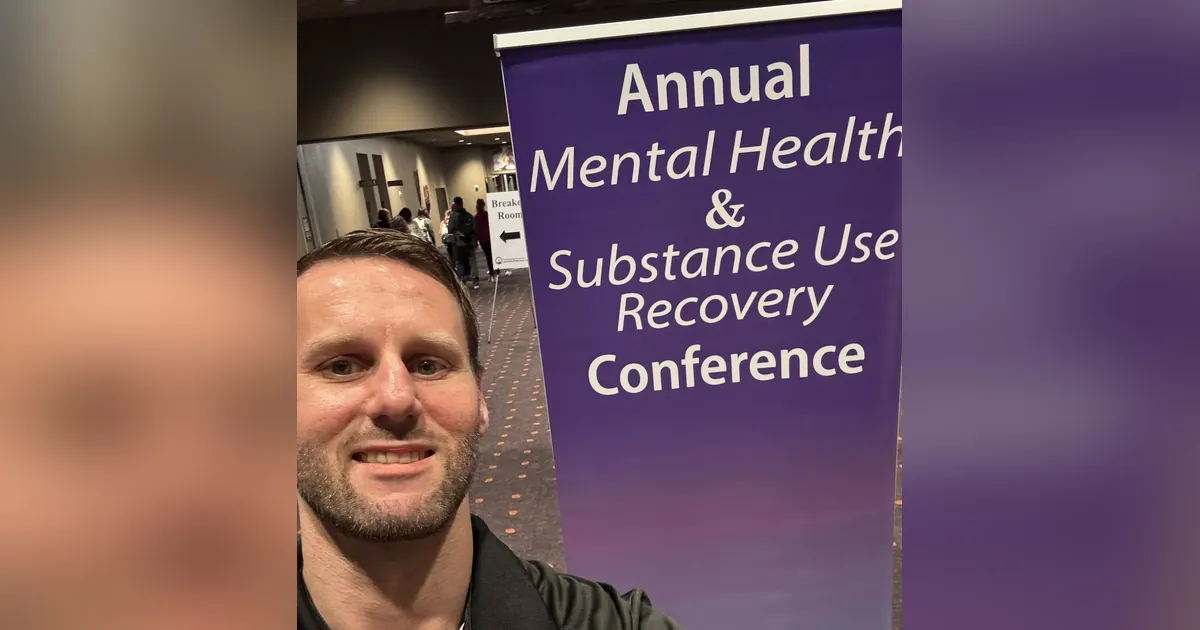
On October 22 I gave a talk at the 22nd Annual Mental Health and Substance Use Recovery Conference, held October 22 and 23 at the Kalahari in Wisconsin Dells. UW-Stevens Point Continuing Education runs it.[1] My session was Session 17 on Thursday afternoon: “ReturnPath: Bridging the Post-Acute Gap After Treatment Ends.”[2] The conference event page has the details.
Direct Answer
My main takeaway was post-traumatic growth. I had never heard the term before, but right after hearing it I realized it is what I went through after losing Caroline. Growing from something traumatic takes intentionality. It isn’t guaranteed, and I would guess it isn’t even likely. But it can become the fuel that leads to a more intentional life.
The Friday keynote on post-traumatic growth
The Friday morning keynote at 9 a.m. on October 23 was the closing keynote of the conference.[2] Dr. Roberto Rivera gave it, with a talk called “From Surviving to Thriving: Cultivating Critical Wellbeing and Beloved Community.”[3] It covered post-traumatic growth. One slide defined it, citing Calhoun and Tedeschi (1998), as the positive change that can come out of struggling through highly challenging life circumstances or traumatic events. Put simply, it is growth that can come out of struggling through something you never would have chosen.
When I heard the definition, I recognized what happened to me after Caroline’s suicide. Losing her forced me to stop. I had to sit down, look at everything honestly, and stay with myself long enough to decide what I wanted my life to look like. Most of what I’ve built since then started in that period. I wrote more about it in Grief Is Misplaced Love.
Growth like that doesn’t happen just because something terrible did. It takes time, honesty, and people who keep believing in you while you do the work. It also takes a choice to keep working at it. That is the part I want people to hear.
If you are in the middle of something painful, growth is possible. You have to go after it on purpose. I wrote about how setbacks can turn into growth in The Psychology of Setbacks and Growth.
Other sessions on the agenda
The conference opened Thursday morning with a keynote from Darcy Luoma, “Build Your Thoughtfully Fit Core for Resilience and Results.”[2] Post-traumatic growth also came up in two breakout sessions on the agenda. Lisa Dunham led Session 32, “Coping After Client Loss: Postvention Strategies Based in Research and Lived Experience.” Mark Sanders led Session 39, “Beyond Doing Ok: Helping Clients Flourish in Recovery!”[2]
What my session covered
The gap I talked about is the stretch after someone leaves treatment, jail or prison, or another structured setting, when support drops off fast. In my own life, many programs taught me how to stop. Few helped me build who I was becoming after I stopped. When the level of care dropped, I often relapsed.
The case I made fits in one sentence: medicine can stabilize risk, and programming must help people rebuild identity.
I described two layers of support that do different jobs:
| Behavior-based | Identity-based | |
|---|---|---|
| Focus | Stopping harmful behavior | Who the person is becoming |
| Tools | Triggers, coping skills, refusal skills, accountability | Values, self-concept, belonging, purpose, future self |
| Strength | Gets people safe and stable early | A reason to keep going for years |
| Risk when it stands alone | People follow the rules while watched, then stop | Relapse risk when structure drops |
The point was to use both, not to replace what already works. I walked through four steps for the identity side: discover, accept, align, and act. You can read more about the approach in What Is Identity-Based Recovery?
I also handed out a one-page planning worksheet for programs that want to explore a pilot. It walks through questions to answer before deciding whether a pilot fits. You can download the planning worksheet (PDF).
The full slides from my session, “ReturnPath: Bridging the Post-Acute Gap After Treatment Ends,” are also available. You can download the session slides (PDF).
What people asked about
Most of the questions were about whether the curriculum would fit a specific organization. It is designed to work before release or after release, one-on-one or in a group. It can adapt to how a program already runs. The one thing that can’t change is the length. It runs a minimum of 14 weeks, and 16 weeks in a group format.
Two of my former counselors were in the room
James Wagner and Jess Taylor, two of my former counselors, came to the session. They knew me when I was going through my mess, and they didn’t know what my life would turn into. Hearing them encourage me after I spoke meant more than anything I said from the stage.
What I’m taking into next year
- Data to share. I hope to come back with data to present and an update on how the curriculum has progressed over the year.
- Witches Gulch. I want to visit Witches Gulch next time I’m in the area.
- The Whova app. The conference used Whova for the agenda, handouts, presenter bios and networking.[1] It is a great resource, and next time I need to use it fully.
If you were in Session 17, thank you. If you missed it and work with people leaving treatment or custody, the curriculum overview lays out the identity framework from the talk, and my memoir, A Vision of Hope, is the story behind it.
Frequently Asked Questions
What is post-traumatic growth?
Post-traumatic growth is the positive change that can come out of struggling through something painful you never would have chosen. It is not automatic. It takes time, honesty, support and intentional effort.
When and where was the 2026 Mental Health and Substance Use Recovery Conference?
It was held October 22 and 23, 2026, at the Kalahari in Wisconsin Dells, Wisconsin. UW-Stevens Point Continuing Education runs it.[1]
Who gave the closing keynote?
Dr. Roberto Rivera gave the Friday morning closing keynote, “From Surviving to Thriving: Cultivating Critical Wellbeing and Beloved Community.”[3]
What was Session 17 about?
Session 17 covered the gap after treatment, jail or prison, when support drops off fast. It made the case for pairing behavior-based support with identity-based programming.[2]
How long is the curriculum from the talk?
It runs a minimum of 14 weeks, and 16 weeks in a group format. It is designed for before or after release, one-on-one or group, and adapts to how a program runs.
References
- UW-Stevens Point Continuing Education and Outreach. 22nd Annual Mental Health & Substance Use Recovery Conference. Dates, location and Whova app details.
- UW-Stevens Point Continuing Education and Outreach. Mental Health & Substance Use Recovery Conference Schedule. Keynotes and Sessions 17, 32 and 39.
- CADRE. Dr. Roberto Rivera will deliver the closing keynote. LinkedIn, October 2026.