
Table of contents
Caroline was my fiancée and my best friend. We got together shortly after I came home, right after I finished writing A Vision of Hope. We were together five and a half years, and we lived together almost that whole time.
In July of 2025, I lost her to suicide.[1]
I wrote about what that loss did to my sense of who I am in Grief Is Misplaced Love. This page is about something narrower. I have a history with addiction. When someone with that history loses the person closest to them, there is a second question sitting under the grief. It doesn’t always get said out loud. Do I go back to what I used to do so I don’t have to feel this?
Losing Caroline forced me to question everything about my life and about myself. I could self-destruct and return to old behaviors. Or I could sit with the feelings and deal with them as they came. I could take a real look at my life, our relationship, what happened, and what I was going to do next.
I chose to sit with it, and my faith is a big part of why I was able to.
Direct Answer
Grief can raise relapse risk for people in addiction recovery. The unexpected death of a loved one is linked to new alcohol use disorders, and risky drinking among bereaved men has been found to climb in the second year after a loss.[2][3] People with substance use disorders are more vulnerable to complicated grief, and stress and negative emotions are among the most common relapse triggers.[4][5][6] What helps is facing the grief as it comes, with support around you: people who check in, routine, movement, professional help, and staying away from alcohol as a way to cope. Federal health guidance on grief points the same way.[7] Faith can help when it gives you something to hold while you face the pain. Research links positive religious coping with better adjustment and negative religious coping with worse adjustment, and studies of religion after bereavement find generally positive but inconsistent results.[8][9]
Two roads after a loss like this
The police came to my house to tell me. I drove to her mother’s house and told her mother and her daughter. Her brother and sister (and their spouses) came over. I’m not going to go further into that day than that.
What I can tell you is what the months after looked like from the inside. I cried hard every day for the first ninety days. I still cry sometimes.
A lot of the work was coming to grips with one fact: I would never see her or talk to her again.
Going back to my old ways was an option, and I knew it. Would it bring her back? It wouldn’t. It would only hurt me and the people who were still here. I couldn’t escape reality, so I had to deal with it.
That was the choice in front of me, and I didn’t make it once and move on; I had to make it again on a lot of ordinary days, usually without saying anything to anyone.
Why grief is a relapse risk for people in recovery
I’m not a clinician, and this is not therapy advice. What I can do is point to what research shows about grief and addiction. It helps explain why the choice I’m describing is a real one for a lot of people.
A national U.S. study of more than 27,000 adults looked at the unexpected death of a loved one. It was the most common traumatic experience people reported, and the one most likely to be rated as their worst. Afterward, new cases of several disorders went up, including alcohol use disorders in later adult age groups.[2]
A national survey in Hungary looked at drinking after a loss. Among men bereaved for two years, 29.8% were drinking at clinically risky levels, compared with 12.9% of men who weren’t bereaved.[3] So the risk doesn’t end when the first few weeks do.
People who already have a substance use disorder are more vulnerable to complicated grief. In one study of 196 patients with a substance use disorder who had lost someone, complicated grief was tied to less helpful ways of coping (pulling away from people, wishful thinking, and self-criticism).[4]
Stress is one of the best-known risk factors for relapse.[5] In Marlatt’s relapse prevention research, negative emotional states and conflict with other people triggered more than half of all relapse episodes. A person who can use effective coping strategies is less likely to relapse.[6]
Suicide loss adds its own weight.
Grief researcher John Jordan argued that suicide bereavement is different in three ways: what the grief is about, how other people respond to the survivor, and what it does to families.[10] Deaths by suicide, accident, or homicide also carry a higher risk of complications in grieving.[11]
But that research doesn’t prove grief causes relapse. Most bereaved people don’t develop prolonged grief disorder. The American Psychiatric Association estimates that 4% to 15% of bereaved adults do, with higher risk when a death is sudden or unnatural.[12] What I take from it: the risk is real enough to plan for, even with years of recovery behind you.
Sitting with it as it comes
So how do you get through it without going back? For me, the first months came down to small decisions I made every day.
I stayed on the phone with friends and family. I talked through what happened so I could process it, and so I didn’t feel alone in it. Friends and family kept calling to check in, over and over. That made more of a difference than I can put into words.
I got moving. My dog, Eeva, and I walked one to two hours most days. I was lost in my head a lot of that time. Moving and talking were what got me out of it.
I kept getting professional help: I was already seeing a social worker before Caroline died, and after she died I added a grief therapist.
I let people help me. My neighbor Gail made a ton of food: tater tot casserole, mac and cheese casserole, potato casserole, sloppy joes, stuffed peppers, and more. I didn’t have to cook or shop; I could just grieve.
She was a godsend.
Gail also helps with Eeva. She has taken her out every day for more than two years.
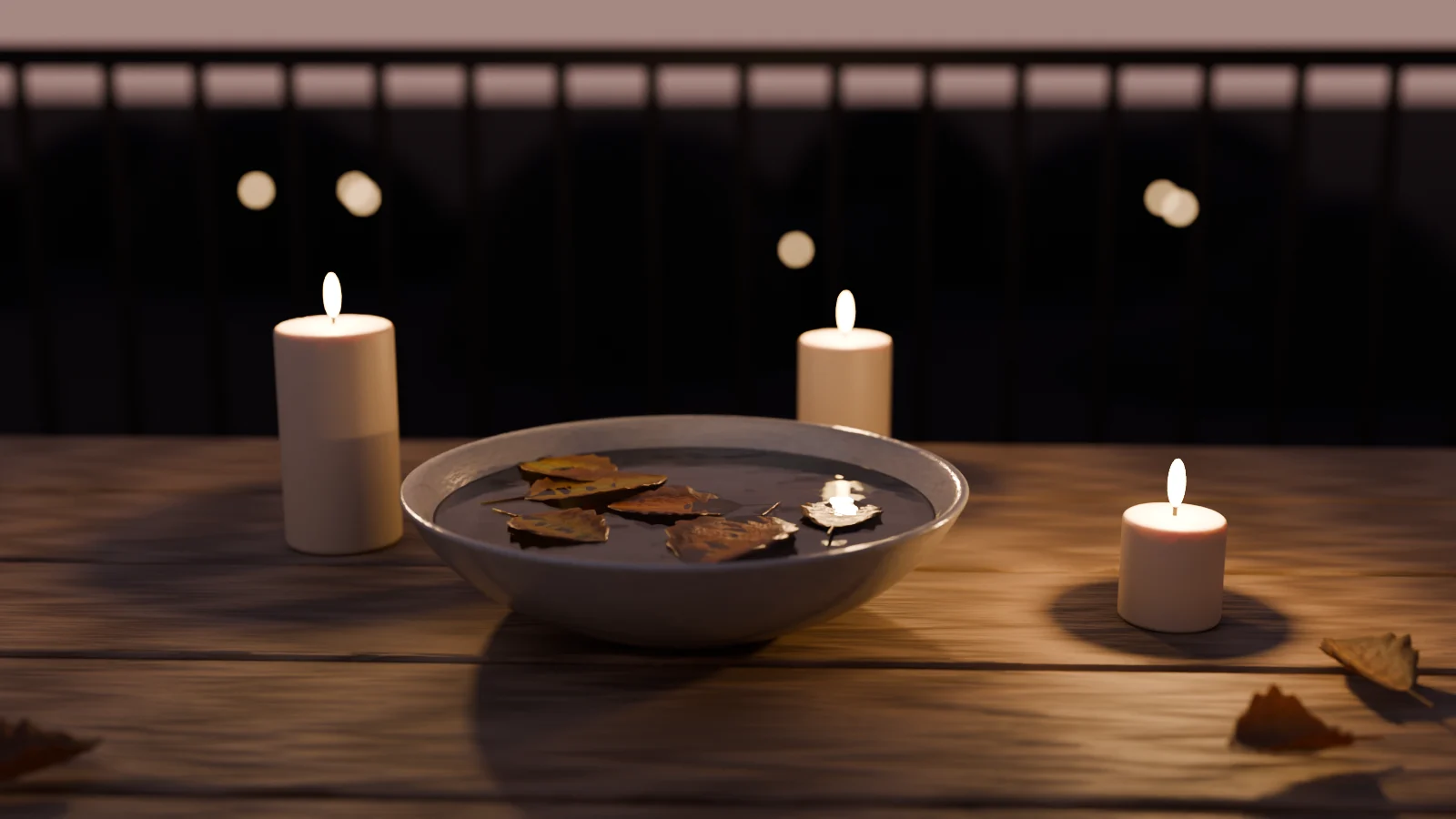
I also held a small ceremony at the house, and I want to be straight about where the idea came from. I had been talking things through with ChatGPT a lot, before Caroline passed and right after, and it suggested a ceremony. I put one of her belongings in a bowl of water, lit candles, and added some ash and a few withering leaves from my balcony. After they soaked for a while, the leaves seemed to come back to life.
I want to be honest about meetings, because a lot of grief advice for people in recovery starts there. Caroline and I went to meetings together early in recovery. Neither of us had a sponsor. My meetings stopped when I started selling cars, and Caroline still went once in a while. When she died, it had been years since my last meeting.
If meetings and a sponsor are part of your recovery, use them. A Cochrane review found high quality evidence that manualized 12-step programs work better than other established treatments for increasing abstinence.[13] For me, the support came from my people, my therapists, my dog, and my neighbor.
Federal health guidance on grief says much the same thing in plainer terms: avoid habits that put your health at risk, like drinking too much alcohol, and look for a grief support group (a local hospice, a hospital, or a religious community can point you to one).[7]
Taking a real look at my life and our relationship
Sitting with it also meant looking at things I didn’t want to look at.
Where did I let her down? What was mine to carry, and what wasn’t?
One of the biggest things I came to understand is that we cannot save anyone else. We can support someone, love them, and want the best for them. But it’s their decisions and their life.
I don’t mean that reaching out to someone who is struggling is pointless. If you’re worried about someone, reach out, and call or text 988 with them or for them. I mean that their choices belong to them. I couldn’t keep carrying hers as if they were mine.
I also had to look honestly at the places where I let her down, and it happened more than once. I lost myself in her. I took care of all of her problems and stopped taking care of myself.
I forgave her for the mistakes she made in our relationship. I was never mad that she took her life. I was just incredibly sad.
She was my best friend.
That kind of looking is hard to do while you’re numbing yourself. I couldn’t have gotten to any of it if I had gone back to my old ways. Some people do this kind of looking on paper. The research behind reflective writing in recovery explains why that can help.
Life isn’t a choose-your-own-adventure book
We can’t see every way things could have played out. Life isn’t a choose-your-own-adventure book where you flip back, pick the other option, and read how it ends. You deal with what happened as best you can.
That was hard to accept, because a loss like this invites a lot of replaying. The American Psychiatric Association describes people with prolonged grief as uncertain about where they fit in a world without the person who died. That uncertainty can undermine their sense of belonging, meaning, purpose, and self.[12]
Grief researcher Robert Neimeyer describes grieving as an attempt to reaffirm or reconstruct a world of meaning that the loss challenged.[14] Researchers studying 1,056 bereaved people described failing to find meaning in a loss as a crucial pathway to complicated grief symptoms.[11]
I don’t read any of that as a promise that everything happens for a reason. I read it as a reason to keep looking for meaning in the mess and the pain, even when the loss itself doesn’t make sense. If you want the longer version of how people rebuild who they are after a life changes, I wrote about identity reconstruction models and what identity-based recovery is.
Faith through the mess, or getting jaded
My faith got me through.
I want to describe it the way I actually hold it, because the word means different things to different people.
My faith is personal. It isn’t tied to one religion, and I take lessons from all of them. For me, faith means this: showing up and giving everything we have, even when the evidence says it won’t be enough. It’s an inherent belief that things will work out the way they’re supposed to, carried by massive action and unshakable belief. To me, doubt means my faith isn’t strong enough.
I also believe death isn’t the end. I believe the body is a vessel for the soul. When the body can no longer host it, the soul leaves. Maybe it finds a new host. Maybe it merges with the field. I don’t claim to know, and I’m not asking anyone to believe it with me. It’s what I believe.
We can have faith that we find meaning through the mess and the pain, or we can become jaded, and that part is within our control.
I’ve written before that fear and faith cannot live in the same place. Grief tested that more than anything else has.
Research doesn’t settle questions of faith, and I don’t use it that way. It does say something useful about how people lean on faith. A meta-analysis of 49 studies found that positive and negative forms of religious coping are related to positive and negative adjustment to stress, respectively.[8] A review of 73 articles found the link between religion and adjustment to bereavement is generally positive but inconsistent. It depends partly on how religion is measured.[9]
After a violent loss, some mourners go through a spiritual crisis that researchers call complicated spiritual grief. The loss shakes the beliefs they relied on.[15] If your faith feels shaken right now, researchers recognize that as a common response to traumatic loss.
If you’re in recovery and you just lost someone
I’m not going to hand you a checklist, so I’ll tell you what I would tell a friend.
Honor their memory. Before you do something you used to do to stop the pain, ask yourself a plain question: would this honor them? Using and self-destructing would not. I believe the person you lost would want you to carry on and live your best life. They would want you to be as impactful on other people as you can, and to carry their memory forward in the way you act.
Let people in when they call. Take the food when someone offers it, and get your body moving even when your head won’t stop. Get professional help if you can. If meetings are part of your recovery, go. And if you lead a grief group or a recovery group, the grief and bereavement curriculum guide covers how we approach this work with groups.
If you’re thinking about suicide, or you’re worried about someone who is, call or text 988 to reach the 988 Suicide & Crisis Lifeline. It’s free, confidential, and available 24/7.[16] If someone is in immediate danger, call 911.
I still cry for Caroline sometimes.
And I’m still choosing to let her be a light that guides my way instead of getting lost in the dark.
Frequently Asked Questions
Can grief cause a relapse for someone in addiction recovery?
Grief doesn’t automatically cause relapse, but it raises the risk. The unexpected death of a loved one is linked to new alcohol use disorders, and risky drinking among bereaved men has been found to climb in the second year.[2][3] People with substance use disorders are more vulnerable to complicated grief. Stress and negative emotions are among the most common relapse triggers.[4][5][6] Years of recovery don’t make anyone immune, so plan for that risk with people, routine, and professional help.
How do you grieve without drinking or using?
Face it as it comes, and don’t do it alone. For me that meant phone calls with friends and family, long walks with my dog, a social worker and a grief therapist, and letting my neighbor help. Federal health guidance on grief says to avoid habits like drinking too much alcohol and to look for a grief support group, including through religious communities.[7] If meetings are part of your recovery, the evidence for 12-step programs is strong.[13]
What is prolonged grief disorder, and is it more likely after a suicide loss?
Prolonged grief disorder is a diagnosis for grief symptoms that persist. For adults, the loss has to be at least a year in the past. The American Psychiatric Association estimates that 4% to 15% of bereaved adults experience it, with higher risk when a death is sudden or unnatural.[12] Deaths by suicide, accident, or homicide carry a higher risk of complications in grieving.[11] People with substance use disorders are also more vulnerable to complicated grief.[4] If your grief isn’t easing, talk with a licensed professional.
How can faith help with grief without turning into empty answers?
Faith helps most when it gives you a reason to keep showing up while you feel the pain. Positive religious coping is related to better adjustment to stress, and negative religious coping to worse adjustment.[8] Studies of religion after bereavement show generally positive but inconsistent results.[9] My own faith is personal and not tied to one religion. Faith-sensitive grief support respects what the grieving person actually believes, and it doesn’t promise that everything happens for a reason.
Is it normal to question your faith or your whole life after a loss?
Yes. Traumatic loss can shake the beliefs a person relied on, and researchers call the spiritual side of that complicated spiritual grief.[15] The American Psychiatric Association describes people with prolonged grief losing their sense of where they fit, including their sense of meaning, purpose, and self.[12] Losing Caroline made me question everything about my life and myself. Taking a real look at those questions is what moved me forward.
Where can I get help right now if I’m in crisis after a loss?
If you’re thinking about suicide, or you’re worried about someone who is, call or text 988 to reach the 988 Suicide & Crisis Lifeline. It’s free, confidential, and available 24/7.[16] If someone is in immediate danger, call 911. This essay isn’t a substitute for crisis care or licensed treatment.
References
- Drasen, A. About Andrew Drasen: Recovery & Reentry (author biography; Caroline’s death in July 2025). A Vision of Hope Media. https://www.avisionofhopebook.com/about
- Keyes, K. M., Pratt, C., Galea, S., McLaughlin, K. A., Koenen, K. C., & Shear, M. K. (2014). The burden of loss: Unexpected death of a loved one and psychiatric disorders across the life course in a national study. American Journal of Psychiatry, 171(8), 864-871. https://pmc.ncbi.nlm.nih.gov/articles/PMC4119479/
- Pilling, J., Thege, B. K., Demetrovics, Z., & Kopp, M. S. (2012). Alcohol use in the first three years of bereavement: A national representative survey. Substance Abuse Treatment, Prevention, and Policy, 7, 3. https://pmc.ncbi.nlm.nih.gov/articles/PMC3286419/
- Caparrós, B., & Masferrer, L. (2021). Coping strategies and complicated grief in a substance use disorder sample. Frontiers in Psychology, 11, 624065. https://pmc.ncbi.nlm.nih.gov/articles/PMC7848780/
- Sinha, R. (2008). Chronic stress, drug use, and vulnerability to addiction. Annals of the New York Academy of Sciences, 1141, 105-130. https://pubmed.ncbi.nlm.nih.gov/18991954/
- Larimer, M. E., Palmer, R. S., & Marlatt, G. A. (1999). Relapse prevention: An overview of Marlatt’s cognitive-behavioral model. Alcohol Research & Health, 23(2), 151-160. https://pmc.ncbi.nlm.nih.gov/articles/PMC6760427/
- NIH News in Health. (2017, October). Coping with grief. National Institutes of Health. https://newsinhealth.nih.gov/2017/10/coping-grief
- Ano, G. G., & Vasconcelles, E. B. (2005). Religious coping and psychological adjustment to stress: A meta-analysis. Journal of Clinical Psychology, 61(4), 461-480. https://pubmed.ncbi.nlm.nih.gov/15503316/
- Wortmann, J. H., & Park, C. L. (2008). Religion and spirituality in adjustment following bereavement: An integrative review. Death Studies, 32(8), 703-736. https://pubmed.ncbi.nlm.nih.gov/18958959/
- Jordan, J. R. (2001). Is suicide bereavement different? A reassessment of the literature. Suicide and Life-Threatening Behavior, 31(1), 91-102. https://pubmed.ncbi.nlm.nih.gov/11326773/
- Currier, J. M., Holland, J. M., & Neimeyer, R. A. (2006). Sense-making, grief, and the experience of violent loss: Toward a mediational model. Death Studies, 30(5), 403-428. https://pubmed.ncbi.nlm.nih.gov/16610156/
- American Psychiatric Association. Prolonged grief disorder. https://www.psychiatry.org/patients-families/prolonged-grief-disorder
- Kelly, J. F., Humphreys, K., & Ferri, M. (2020). Alcoholics Anonymous and other 12-step programs for alcohol use disorder. Cochrane Database of Systematic Reviews, 2020(3), CD012880. https://pubmed.ncbi.nlm.nih.gov/32159228/
- Neimeyer, R. A. (2016). Meaning reconstruction in the wake of loss: Evolution of a research program. Behaviour Change, 33(2), 65-79. https://doi.org/10.1017/bec.2016.4
- Burke, L. A., & Neimeyer, R. A. (2014). Complicated spiritual grief I: Relation to complicated grief symptomatology following violent death bereavement. Death Studies, 38(1-5), 259-267. https://pubmed.ncbi.nlm.nih.gov/24524589/
- 988 Suicide & Crisis Lifeline. https://988lifeline.org/